



If you followed the news last summer, you probably heard plenty of chatter about the Big Beautiful Bill auto loan savings. Lately, though, a different name keeps popping up on IRS pages and in tax software: the Working Families Tax Cuts. Same law, new label, plus a few clarifications worth knowing. Here at Elk Grove Buick GMC, we’ve had many customers ask what's changed, and honestly, it’s a fair question. Tax stuff gets confusing fast.
Key Takeaways
- The auto loan interest break from the One Big Beautiful Bill Act now appears in IRS materials under the Working Families Tax Cuts name. The core rules haven’t changed.
- Eligible buyers can deduct up to $10,000 a year in interest on a qualifying new-vehicle loan taken out after December 31, 2024, for tax years 2025 through 2028.
- The deduction phases out above $100,000 in modified adjusted gross income for single filers and $200,000 for joint filers.
- The vehicle must be new, for personal use, under 14,000 pounds GVWR, financed with a lien, and have final assembly in the U.S. Leases and used vehicles don’t qualify.
- You claim it on the new Schedule 1-A whether or not you itemize, and your vehicle’s VIN has to go on your return.
What Happened to the Big Beautiful Bill Auto Loan Deduction?
Short answer? Nothing bad. The Big Beautiful Bill auto loan tax deduction was signed into law on July 4, 2025, as Public Law 119-21. The IRS now refers to that package as the Working Families Tax Cuts, grouping the car loan break with “No Tax on Tips,” “No Tax on Overtime,” and a new deduction for seniors.
So what’s actually new? Mostly clarity. The IRS updated its fact sheet in late July 2025 to spell out what “final assembly in the United States” means. In December 2025, the IRS and Treasury released proposed regulations covering eligibility, qualifying loans, and lender reporting. And the 2026 filing season brought a brand-new form, Schedule 1-A, on which this deduction is claimed.
Here’s the part people love: you don’t have to itemize. The car loan interest deduction works whether you take the standard deduction or not. That’s a big deal for plenty of Elk Grove families who never touch Schedule A.
How Much Can You Deduct, and Who Gets the Full Amount?
The cap is $10,000 in interest per year. Let’s be realistic, though. Most loans won’t generate anywhere near that much interest annually. A typical new-vehicle loan might produce a few thousand dollars in year one, and that number shrinks as you pay down the balance.
Then there’s income. The car loan interest deduction phase-out kicks in once your modified adjusted gross income passes $100,000 if you’re single, or $200,000 if you’re married filing jointly. Under the Schedule 1-A math, the $10,000 cap drops by $200 for every $1,000 (or part of $1,000) you earn over that threshold.
| Filing Status | Phase-Out Starts Above | Deduction Fully Gone At |
|---|---|---|
| Single | $100,000 MAGI | $150,000 MAGI |
| Married Filing Jointly | $200,000 MAGI | $250,000 MAGI |
One more thing to remember: this is a deduction, not a credit. It reduces your taxable income, so your actual savings depend on your tax bracket. Deduct $3,000 in interest while sitting in the 22% bracket, and that’s roughly $660 back. Not life-changing, but definitely not nothing.
Does My Car Qualify for the Car Loan Interest Deduction?
It’s the question we hear most on our showroom floor: “Does my car qualify for the car loan interest deduction?” According to the IRS, your vehicle needs to check every one of these boxes:
- It’s new, meaning the original use starts with you. Used vehicles are out.
- It’s for personal use, not business or commercial work.
- It’s a car, minivan, van, SUV, pickup, or motorcycle with a GVWR under 14,000 pounds.
- It’s financed with a loan secured by a lien on the vehicle. Leases don’t count.
- Its final assembly happened in the United States.
That last requirement trips people up. You can check it two ways: look at the vehicle information label on the window, or run the VIN through NHTSA’s free VIN Decoder to see the plant of manufacture.
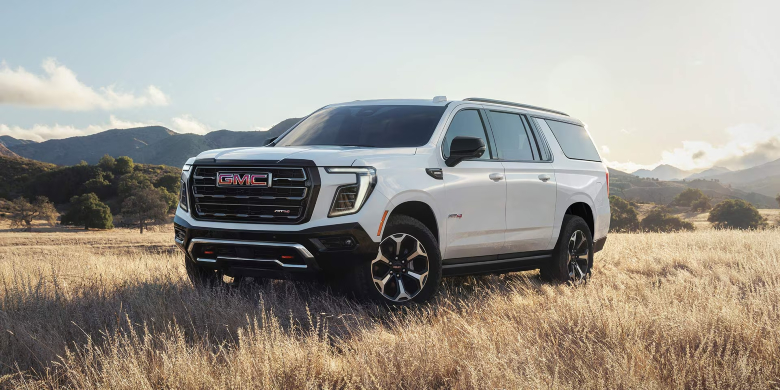
On our lot, models like the GMC Yukon, Acadia, and Canyon, along with the Buick Enclave, are built here in the States. Don’t assume, though. Some Sierra 1500 pickups are produced at plants in Mexico or Canada, and several Buick crossovers are built overseas. Our team will gladly pull the assembly info on any specific vehicle before you sign a thing. And if you refinance a qualifying loan down the road? Interest on the refinanced amount generally still counts.
How to Claim Your Working Families Tax Cut Auto Loan Savings
Claiming your Working Families Tax Cut auto loan deduction happens in Part IV of Schedule 1-A, filed with your Form 1040. You’ll need the total interest you paid for the year, which your lender is required to report to you, as well as your vehicle’s VIN. Tuck your purchase paperwork somewhere safe.
A quick note for fellow Californians: this is a federal deduction. California’s tax rules don’t automatically follow federal changes, so check with a tax professional before assuming it carries over to your state return.
The Bottom Line for Elk Grove Drivers
New name, same opportunity. If you’re shopping for a new, American-assembled vehicle and planning to finance, the Working Families Tax Cuts could trim your tax bill for the next few years. It won’t replace a great deal on its own, but paired with smart financing? That adds up.
We’re not tax advisors, and we’d never pretend to be. Your CPA or tax preparer is the best person to confirm how this fits your situation. What we can do is help you find a qualifying Buick or GMC, verify where it was assembled, and set up financing that works for your budget. Stop by Elk Grove Buick GMC, and let’s figure it out together.
Frequently Asked Questions
Is the Working Families Tax Cuts the same as the One Big Beautiful Bill?
Yes. The IRS uses the name "Working Families Tax Cuts" for the provisions signed into law on July 4, 2025, including the car loan interest deduction, which many people still call the Big Beautiful Bill deduction.
Can I claim the deduction if I lease my vehicle?
No. Lease payments don’t qualify. The deduction only applies to interest on a loan used to purchase a qualifying vehicle that’s secured by a lien.
Do used or certified pre-owned vehicles qualify?
No. The vehicle's original use must begin with you, so only new vehicles are eligible.
Do I need to itemize to claim the car loan interest deduction?
No. It’s available to both itemizers and people who take the standard deduction. You’ll claim it on Schedule 1-A.
How long will the deduction be available?
It covers tax years 2025 through 2028 for loans originated after December 31, 2024.
How do I find out where my vehicle was assembled?
Check the vehicle information label on the window, or enter the VIN into NHTSA’s VIN Decoder to see the plant of manufacture. Our sales team can also look it up for you.